
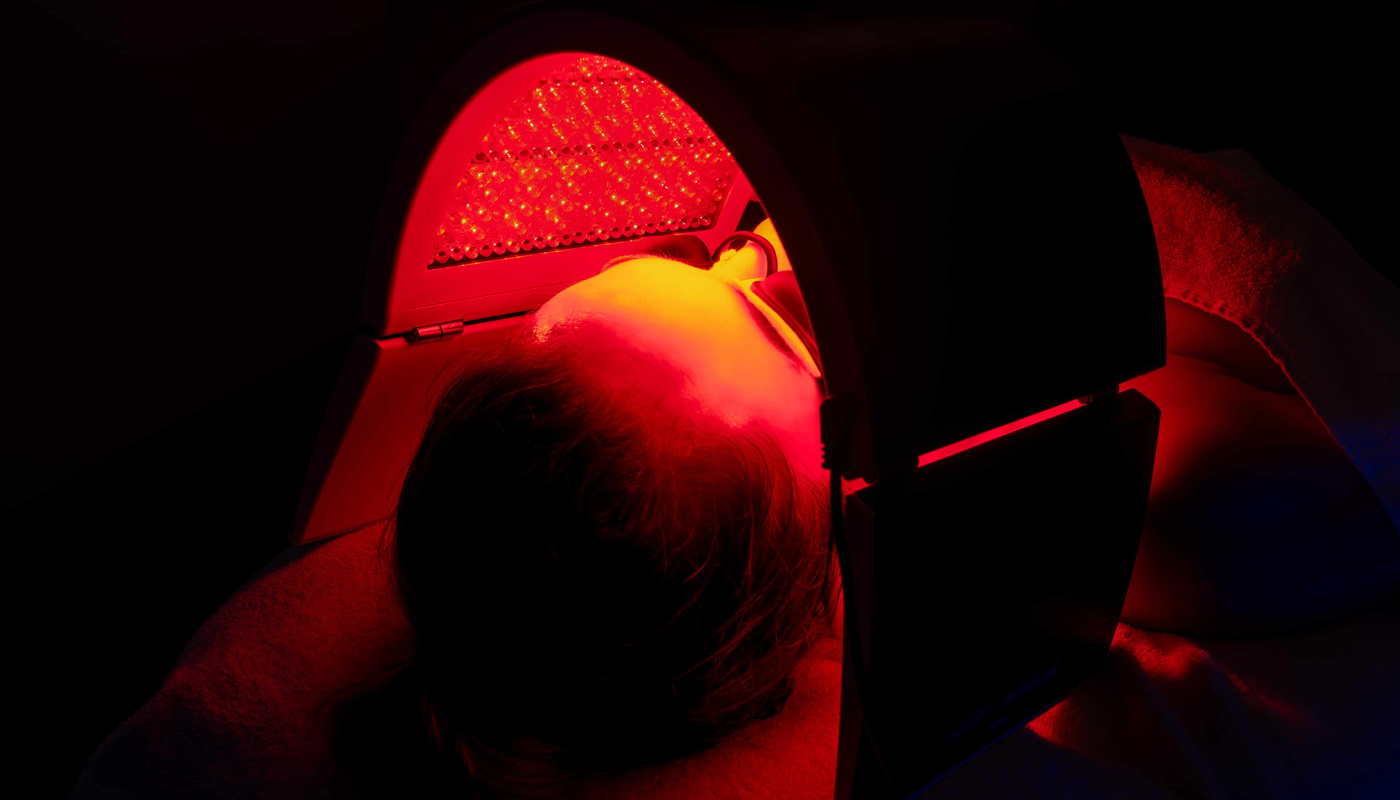
What does LED therapy actually do?
LED therapy stimulates your skin with specific light wavelengths. It activates natural cell metabolism without damaging the skin. Red light stimulates collagen production and reduces fine lines. Blue light has an antibacterial effect and is often used for acne.
The scientific term for this is photobiomodulation. Cells react to light of a specific wavelength by increasing their energy production. Specifically: light stimulates the mitochondria in skin cells to produce more ATP. ATP is your cell's energy fuel, similar to a phone battery. More ATP means cells recover faster, function better, and produce new proteins, including collagen, more efficiently. All of this without the need for controlled, superficial skin damage to initiate a regenerative healing response, as is the case with a peel, microneedling, or laser treatment.
If you combine LED with a peel, microneedling, or laser treatment, both techniques join forces: the treatment activates the natural healing process, while LED supports cellular energy production to make this recovery as efficient as possible.
The LightStim Elipsa operates at a wavelength of 635 nanometers, precisely within the range that research shows the strongest results for skin repair and collagen stimulation.
Red, blue, and infrared: what's the difference?
Not every wavelength works the same way. The different light colors represent different wavelengths, each reaching a unique depth and stimulating different skin cells. In professional LED light therapy, red, blue, and infrared light are primarily used, each with a specific effect.
Red light (620–700 nm) penetrates into the dermis, the deeper skin layer where fibroblasts are active. It stimulates the production of collagen and elastin, improves blood circulation, and supports tissue repair. This makes red light particularly suitable for skin aging, dull skin, and recovery after more intensive treatments.
Blue light (415 nm) primarily works in the upper skin layers and has an antibacterial effect. It helps reduce the bacterium Cutibacterium acnes, which plays a significant role in acne, without damaging the skin. Additionally, it supports the regulation of sebum production.
Infrared light (830 nm) penetrates the deepest, reaching into the subcutaneous tissue. It supports the natural healing process, has a calming effect, and is widely used for sensitive skin, rosacea, and after more intensive skin treatments.
The LightStim Elipsa combines multiple wavelengths simultaneously using patented Multiwave technology, stimulating your skin on multiple levels at once.
The sweet spot: why dosage makes all the difference
More light isn't always better. This might sound counter-intuitive, but it's one of the most well-established principles in LED literature: the efficacy of photobiomodulation follows a so-called hormesis curve.
Too little light yields no or minimal effect. Too much light diminishes the effect or can even be inhibitory. The sweet spot, the optimal dose, is the zone where cells are maximally stimulated without being overloaded.
This is precisely why professional equipment and protocols are important. The intensity (expressed in mW/cm²), the total light dose (J/cm²), the wavelength, and the treatment frequency together determine whether you are in that optimal zone. A home device typically offers insufficient control and consistency for this.
.jpg)
For which skin conditions is LED therapy effective?
LED is versatile, but not equally powerful for everything. What it is effective for:
Skin aging and fine lines — red light activates fibroblast activity and stimulates collagen production. Result: firmer, smoother skin with regular use.
Acne and blemishes — blue light targets the bacterial component of acne, while infrared light calms the underlying inflammation.
Redness, rosacea, and sensitivity — infrared light influences neurovascular skin reactions, making erythema and irritation more manageable.
Recovery after more intensive treatments — LED reduces ROS (reactive oxygen species), inhibits skin cell senescence, and supports the recovery process. This makes it particularly valuable in combination with microneedling, peels, or other treatments that temporarily stress the skin.
PIE and PIH prevention — red and purple spots after acne or treatments (PIE: post-inflammatory erythema, PIH: post-inflammatory hyperpigmentation) are stubborn. LED therapy before or immediately after intensive treatments can reduce their likelihood by more rapidly suppressing inflammation.
For severe pigmentation, deep wrinkles, or structural volume loss, LED is a support, not a replacement. In such cases, we combine it with the treatment that addresses that specific problem.
Isn't this the same as a home LED mask?
A question we often hear, and a valid one. The difference lies in light dosage, precision, and professional guidance.
The market for home LED devices is developing rapidly, and high-quality LED masks are now available. However, in the clinic, we work with professional LED equipment, in this case, the LightStim Elipsa, which is designed for intensive professional use. Thanks to its patented Multiwave technology and higher, constant light intensity, the skin can be stimulated in a targeted manner. Additionally, we tailor the treatment to your skin condition and any other treatments you may be undergoing that day, such as a peel, microneedling, or laser treatment. This ensures the skin receives precisely the right dose of light at the right time.
A home LED mask can be a valuable addition to support the skin between treatments. A professional LED treatment offers more intensive stimulation and can also be excellently combined with other skin-improving treatments, whereby both enhance each other.
What are the benefits during your treatment?
LED works most effectively when combined with another treatment. We don't view it as a standalone extra, but rather as a results booster. You can add the LightStim Elipsa to treatments such as:
Microneedling — less downtime and extra collagen stimulation. LED supports the natural recovery process, accelerates cell regeneration, and helps reduce post-treatment redness more quickly.
HydraFacial — extra glow and soothing. After the skin has been intensively cleansed and hydrated, LED supports recovery and enhances a fresh, radiant appearance.
Chemical peel — faster recovery and less redness. Because a peel temporarily compromises the skin barrier, LED helps support the recovery process and soothe the skin more quickly.
IPL or fractional laser treatment — supports skin recovery. After a laser treatment, LED helps reduce redness and heat sensation, supports skin regeneration, and contributes to a more comfortable recovery.
.jpg)

Will I see immediate results?
Yes, and no. Immediately after the treatment, your skin will appear calmer, fresher, and with more glow. Redness after a treatment subsides more quickly, and the skin feels calmer. That's the immediate effect.
The cumulative effect, such as collagen production, structural skin improvement, and long-term calming of sensitivity, only becomes visible over time. Research shows that multiple sessions are needed for lasting results, similar to how muscle training works: one session has an effect, but a series of sessions builds a lasting effect. The best results are achieved when you regularly incorporate LED into your treatments.
What can you expect after the treatment?
LED therapy has no downtime. You can immediately apply makeup and resume your daily activities. As with any skin-enhancing treatment, we advise avoiding excessive sun exposure on the treated area for the first few days and using SPF daily. Not because LED makes the skin more sensitive to UV radiation, but because you've just invested in your skin's health, and UV radiation can unnecessarily disrupt the recovery process and the results achieved.
Complete your treatment
For €30, you can add a professional LED treatment that supports the recovery process and further optimizes the results of your treatment. No separate appointment, no extra recovery time – just a quick addition that gives your skin that little bit extra.
FAQ
Curious which approach suits your skin?
We always begin by assessing your skin condition and carefully tailor the treatment and light intensity to your skin's specific needs at that moment. Unsure if LED therapy would be a valuable addition to your treatment? Don't hesitate to ask about it during your next appointment. Our skin therapists will be happy to advise you on the possibilities and what best suits your skin and treatment goals.
Discover what LED therapy can do for your skin
.jpg)


.jpg)
.jpg)


